
Chris Tackmann, General Manager & CEO
Electricity powers everything we do. From the moment we wake up to the moment we go to bed, we rely on electricity to light our homes, power our appliances, charge devices, and fuel our businesses. Yet, the electric grid that delivers this essential resource faces increasing strain due to our growing dependence on electricity, aging infrastructure, and extreme weather events.
When these factors are combined with the rising demand – typically in the morning and evening – the grid is pushed to its limits. If the electricity demand surpasses the grid’s capacity to deliver, a significant risk of widespread power outages is imminent. 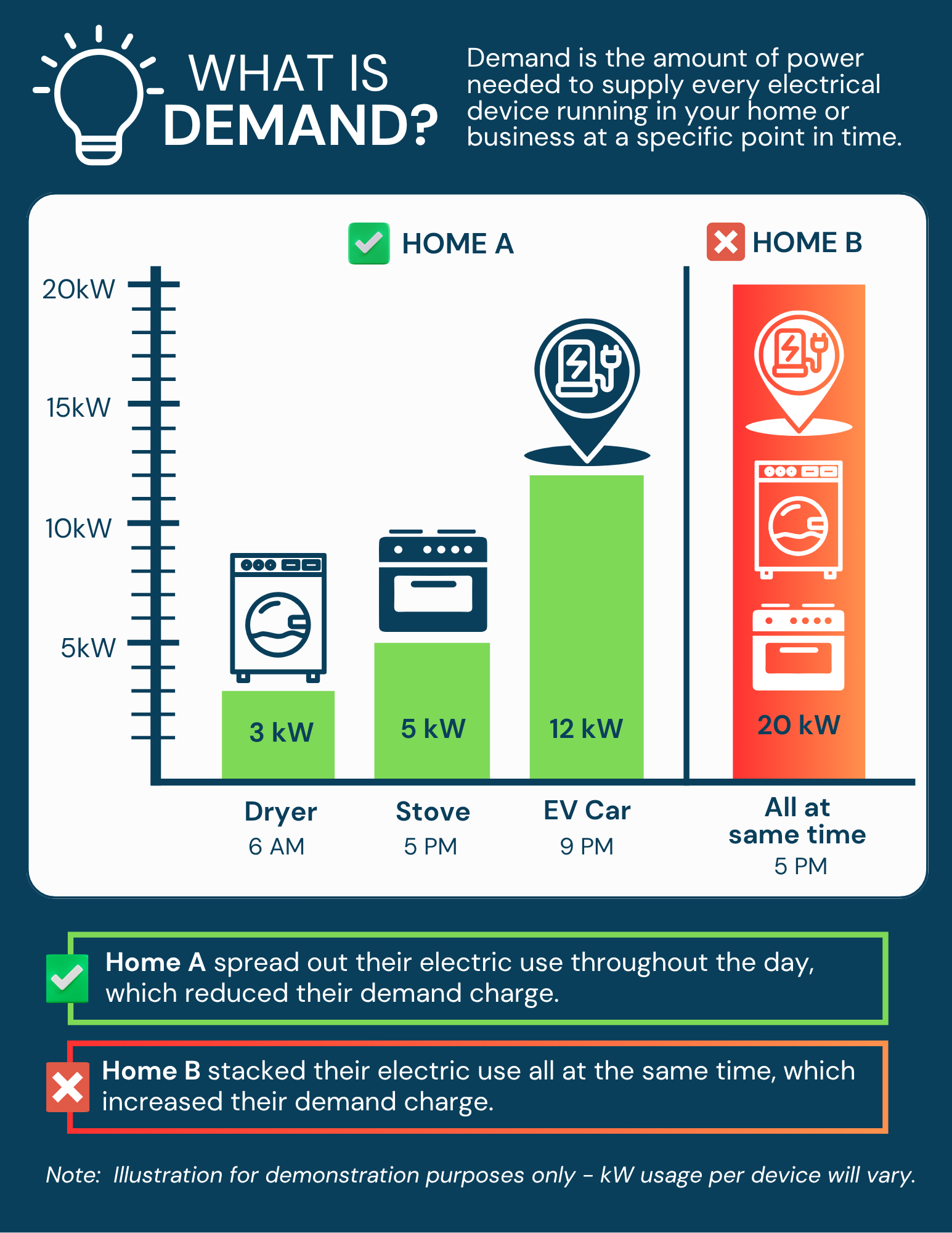 Addressing the underlying challenges facing the electric grid, such as investing in infrastructure upgrades and promoting energy conservation measures, is crucial to mitigating the risk of blackouts and ensuring a reliable and resilient power grid.
Since 2023, an additional line item expressed as “Demand Charge” was added to bill statements. Beginning January 1, 2026, you’ll see a demand charge for the highest power usage during a 15-minute period within that month at the amount of $0.25 kW. The average household monthly demand is roughly 10 kW, which equates to approximately $2.50 per month.
For example, the graphic compares two homes’ energy demand.
Home A had its highest demand for the month at 12 kW. Therefore, 12 kW multiplied by the demand charge of $0.25, Home A would be billed $3.
Home B had its highest demand for the month at 20 kW. Their charge would be 20 kW multiplied by the demand charge of $0.25, Home B would be billed $5.
This charge resets monthly and is designed to fairly allocate cost among those who use more power and put more strain on the grid. Additionally, this change aligns with how we are billed by our wholesale power provider, Dairyland Power Cooperative, ensuring accurate cost distribution among our members.
One of the ways you can help is by staggering the use of high-energy appliances throughout the day. For instance, like Home A rather than charging your electric vehicle, cooking, and doing laundry at the same time, spread these tasks out at different times. By spreading out your energy consumption, you can help ease grid pressure and minimize demand charges on your bill.
As our reliance on electricity continues to grow, it’s crucial for us to actively participate in sustaining the grid that powers our daily lives. By being mindful of when and how we use electricity, we can help alleviate stress on the system and ensure a reliable supply for everyone.